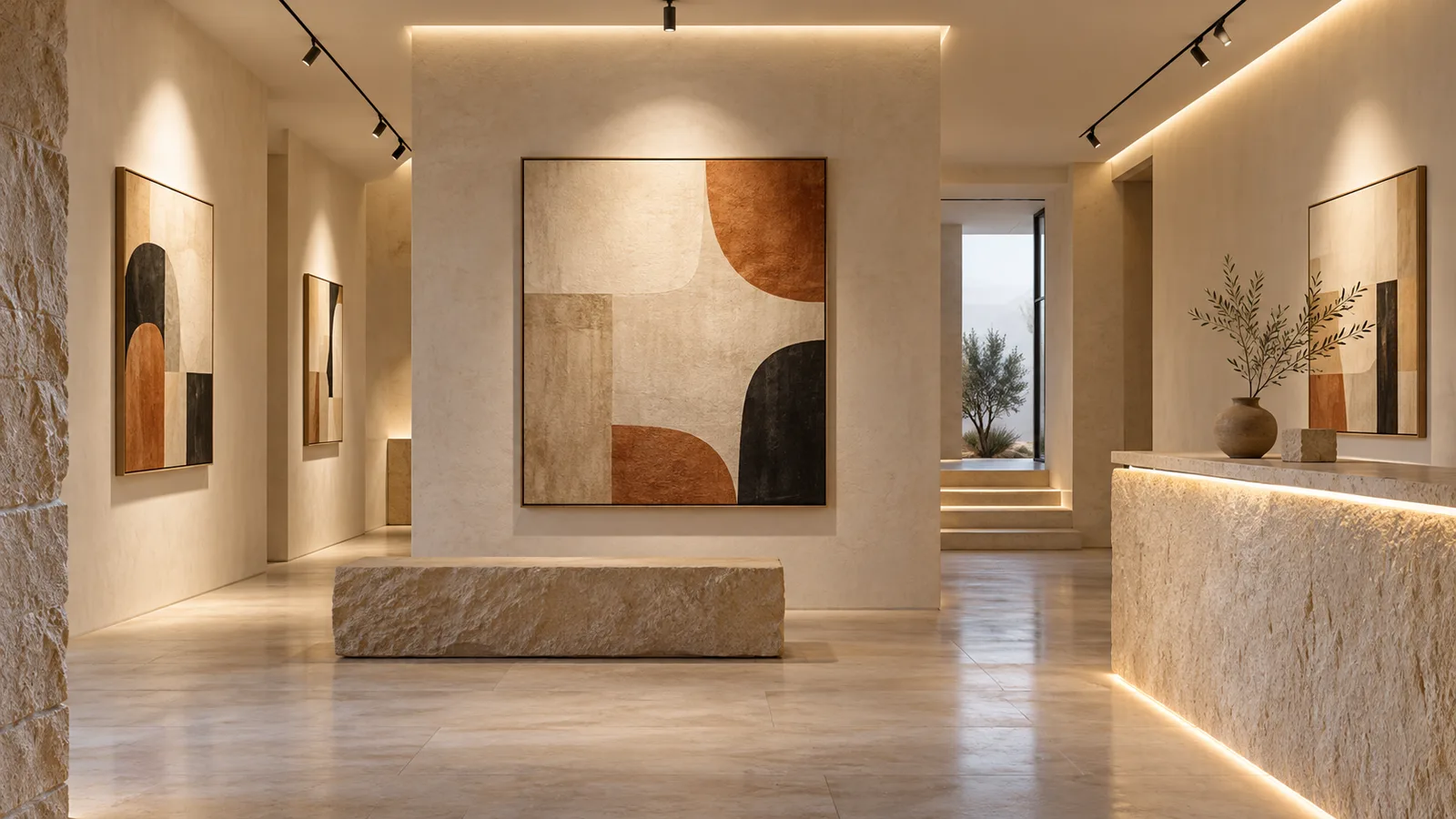
For a GCC art gallery, select LED strip layouts by their role: concealed room light, display-case fill, plinth detail, reception lighting or a purpose-designed linear wall-lighting assembly. Keep precise artwork illumination and conservation requirements separate from decorative strip selection. A high-CRI reel alone does not establish a gallery-ready luminaire.
For a gallery fit-out in the UAE, Saudi Arabia or neighboring GCC markets, compare these options by source concealment, reflections, exhibition changes, service access and the collection’s exposure limits. A project may need only some of the five roles.
Agree the artwork requirements first
The Canadian Conservation Institute’s museum LED bulletin explains that vulnerable objects can be damaged by visible light and that intensity and exposure duration remain important. LED technology does not remove that constraint. Have the curator or conservation specialist define the relevant object restrictions before selecting the operating scene.
Do not apply one generic illumination limit to every artwork. A rotating exhibition may introduce different materials or lender conditions. Record the approved light levels and operating hours where specified, and reassess when the objects change. Neither this guide nor a product’s CRI entry supplies those project limits.
Compare five layouts by the task they serve
| Layout | Useful role | Approval limit |
|---|---|---|
| Concealed ceiling cove | Room background and architectural continuity | Spill onto objects and source reflections |
| Shielded showcase linear fill | Supplemental light in a fixed case | Object exposure, glass reflections and heat |
| Recessed plinth detail | Separate a display base visually from its surroundings | Viewing angles, floor glare and access |
| Reception or interpretation joinery | Staff-facing or information-area light | Separation from collection display zones |
| Engineered linear wall-lighting assembly | A planned vertical illumination task | Optical distribution verified on the wall |
1. Concealed ceiling cove for room background
A cove can provide architectural background while dedicated artwork luminaires serve the display. Position the source so normal visitors do not see an exposed bright line. Check the resulting spill on the artwork and ceiling, including any daylight condition the gallery uses.
The 8mm CRI80 COB family is a comparison candidate for a background role that accepts its selected white variant. If its spill contributes materially to the artwork’s illumination, review the combined scene against the curator’s color requirement. A background circuit cannot be ignored just because it was labeled decorative.
2. Shielded linear fill in a fixed display case
Linear fill may be considered where a case needs supplementary light and the object-specific limits allow it. Check the whole case from standing and seated viewing positions. A source hidden above the object may still appear in glass or polished surfaces.
Compare the 8mm CRI95 COB family and 8mm CRI98 SMD2835 family as source candidates in the intended profile. These catalog entries do not establish measured spectral suitability, R9 or conservation approval. Use the Ra and R9 guide when saturated colors affect acceptance.
The designer must evaluate heat, access and exposure inside the completed case. Keep power equipment outside a sensitive enclosure where the approved design requires it; do not assume an empty-case demonstration represents an occupied display. If the necessary evidence is missing, retain a specialist case-lighting solution instead of substituting a reel on price alone.
3. Recessed plinth detail away from the artwork
A recessed line at a plinth can define the display base without serving as the main light on the object. Review low sightlines, floor reflections and reflections in the object itself. Avoid a visible source that distracts from the display or creates an uncomfortable contrast at floor level.
Fixing and wiring should allow service without disturbing the object. Route the circuit clear of moving plinth sections and cleaning access. Agree who will isolate the circuit before display changes. The driver-access guide helps turn that requirement into a service plan.
4. Reception and interpretation joinery on a separate zone
Counter and information-area lighting can have a different schedule from the collection display. Separate these controls so staff can work without automatically restoring the full exhibition scene. Check legibility of the actual printed material and source reflections in the desk surface.
A fixed-white source is appropriate where the project wants a consistent scene. If adjustable white is specified, the 8mm CCT COB family is a candidate requiring matched channel control and approved settings. Do not extend its adjustable appearance to an unverified claim of conservation benefit. Review this area with the commercial-lighting application guidance.
5. A purpose-designed linear assembly for wall illumination
Choose this approach only when the completed luminaire has the optical control needed for the wall. Bare strip in a shallow channel does not automatically produce uniform vertical illumination. The ERCO gallery design guide distinguishes wallwashing from accent lighting and stresses controlled distribution and visual comfort.
Require a wall mock-up or appropriate luminaire evidence at the intended geometry. Check the top and bottom of the displayed area, joints, reflections and how results change when art moves. If a general strip assembly cannot meet the task, use a dedicated wallwasher or adjustable artwork luminaire. The finished assembly needs its own optical design; our catalog reels are not finished wallwashers.
Approve the exhibition scene before bulk release
Review representative artwork materials under the complete lighting scene, including the background circuits. Use a permitted reference sample if handling the actual object is restricted. Record the selected white appearance, profile and cover; phone photographs cannot validate numerical color metrics or exposure levels.
Confirm dimming behavior, reopening and closing scenes, power-restoration behavior and access for replacement. For light-sensitive displays, verify that the approved operating schedule is followed rather than leaving the collection scene on for cleaning or overnight use. Keep the display-lighting plan separate from required emergency lighting and the project’s electrical approval.
Send the layout roles, models, voltage variants, branch lengths, control requirements and curator-defined restrictions through the enquiry form. LEDStripStar’s standard MOQ is 500 meters and custom MOQ is 2,000 meters. Any required metric not published for the selected configuration must remain an open requirement until independently established; a catalog CRI value does not close that gap.
Catalog & Sourcing Note
This article is prepared from our current product catalog and B2B specification workflow. Electrical, waterproofing and installation requirements vary by model and market, so confirm the final specification and approved sample before ordering.
Discuss Your Specification