RGB can look white; check whether it meets the lighting specification
An RGB LED strip can produce a white-looking mixture by operating its red, green and blue channels together. That setting does not establish a specified CCT, CRI or lumen output. For merchandise, worktops, guest-room lighting or another application where white-light quality matters, choose a product with a suitable white source and verify the exact operating mode on a sample.
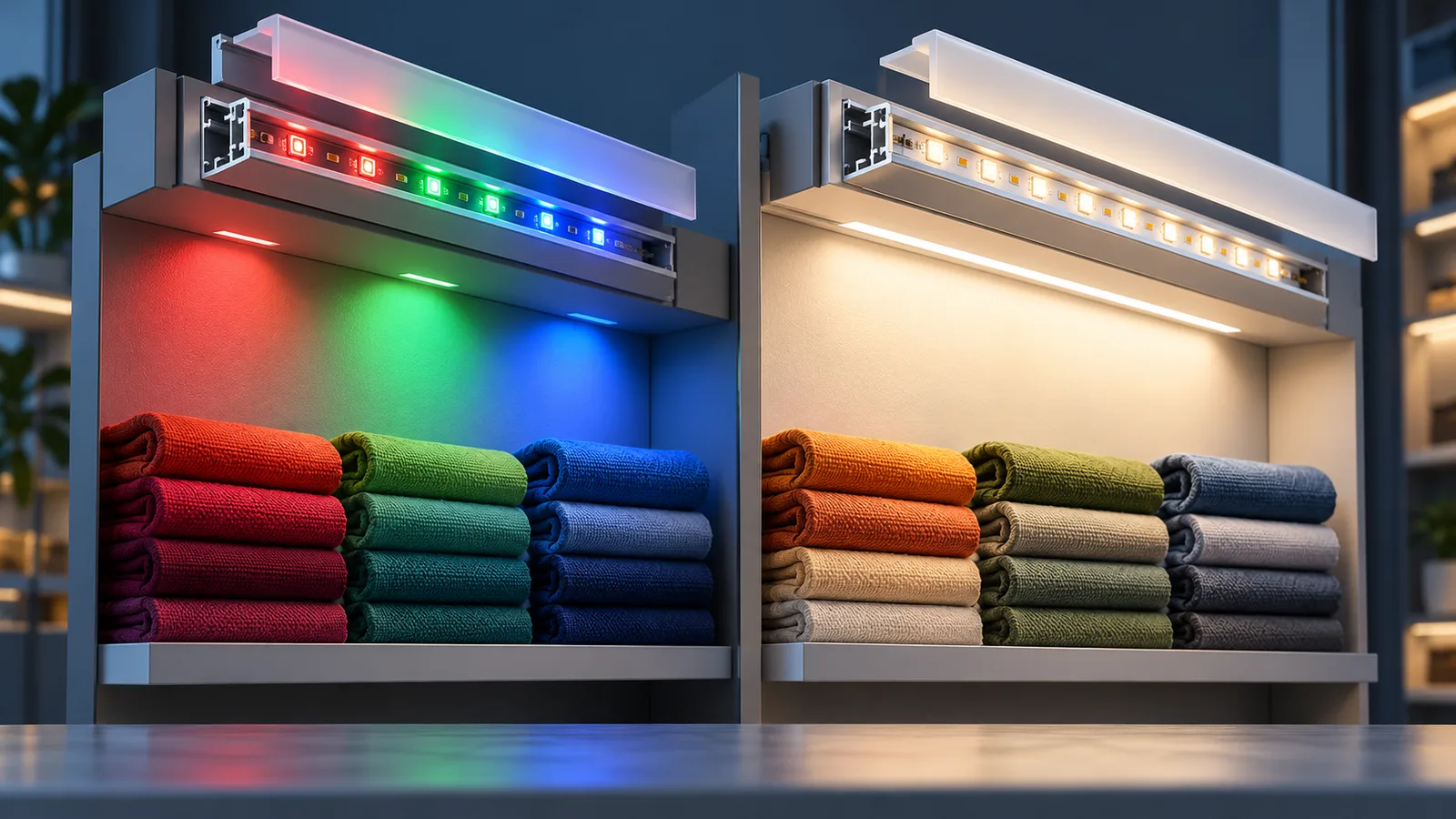
For a decorative cove, an RGB white preset may be acceptable after visual approval. For a retail display, specify the white-light requirements before selecting the strip. A product that gives attractive saturated colors can still make fabrics, food or skin tones look different from the approved reference.
The header image is a concept illustration. It does not show measured color performance of particular products.
Find out how the controller creates white
A remote or app’s “white” setting may turn on the RGB channels together, select a dedicated white LED, or mix white and colored channels. Ask which channels it operates. The same button label can produce different light on different products.
Color Kinetics’ color-science explanation distinguishes RGB mixing from systems with a separate white source. It also explains why lights that look similar on a white surface can render colored objects differently. Its proprietary multi-channel systems should not be treated as evidence for an ordinary RGB tape.
Photograph the sample PCB and channel markings. For an analog strip, identify the common conductor and each controlled channel from the model drawing. For an addressable product, obtain the supported channel arrangement and data protocol. The RGB and addressable comparison covers the control distinction.
Equal numerical settings for red, green and blue do not prove a neutral white point. The LEDs and control system determine the emitted light. A phone photograph also cannot confirm CRI or CCT because exposure and white balance can change the displayed result.
Choose the light source from the job it must do
| Construction | Useful application | What the buyer must verify |
|---|---|---|
| RGB | Decorative color scenes and effects | Acceptability of the mixed-white preset in the actual space |
| RGBW | Color effects plus a dedicated fixed white source | White-channel CCT, color quality, output and controller mapping |
| RGB plus tunable white | Color scenes and adjustable white lighting | Warm/cool channels, supported modes and combined load |
| Separate RGB and white strips | Independent decorative and functional lighting | Profile space, two load schedules and coordinated controls |
Obtain the dedicated white channel’s CCT, CRI and usable output when comparing RGBW products. Some controllers blend RGB into a white scene, so approve the complete preset as well as the white channel on its own.
For a display that always needs one white tone, compare a dedicated white strip such as the 8mm SMD2835 CRI98 catalog model. The listed rating belongs to that model; final order voltage, color option and configuration require confirmation.
When the buyer needs warm and cool white adjustment, the 480LED/m CCT COB model is a white-channel construction to review. Its WW+W listing describes warm and cool white, without an RGB color-effects function. Use the RGB range to evaluate effects separately.
Approve white light on the objects customers will see
Build a representative fixture with the proposed strip, controller, supply and diffuser, including the intended channel and cavity. Record the exact model and firmware or profile setting where applicable, then review it from the normal viewing position.
First, operate each available channel separately and check that the controller labels agree with the output. Then select the intended white preset. Compare it with the approved white-light reference at a similar useful illumination level, using actual merchandise or representative material samples.
Include several colors and finishes. A white card can reveal a visible tint, while red fabric, wood, printed labels and skin-tone samples help reveal differences that a white wall hides. Visual review supports appearance approval; it does not replace instrument measurements where the contract specifies color metrics.
If CCT, CRI, R9 or another color requirement is part of the project, define the measuring method and acceptance limits. Record the operating state for every reading. A value measured on the dedicated white channel should not be used to describe an RGB mixed-white scene without checking that scene.
Check the far end of the longest representative branch, low brightness, scene changes and restart after power loss. If the far end has a tint while the start looks acceptable, investigate voltage, wiring and channel loading before changing the white preset for the whole installation. The voltage-drop guide explains the electrical checks.
Size the supply for the permitted channel combinations
Obtain power data for the intended white scene and the maximum state the controller permits. The load may differ between one color, mixed RGB white, dedicated white and a combination of color and white channels.
Use the approved model data:
Branch power = watts per meter in the stated mode × branch length
Approximate branch current = branch power ÷ rated DC voltage
Check total current, each channel limit and the shared conductor. Do not divide the total equally among channels unless the product data supports that calculation. If the controller limits combined output, record the limit in the approved system configuration.
For a requirement stated in lumens, specify whether it applies to the bare strip or the installed fixture and name the operating mode. The lumen verification guide provides the measurement questions to settle before ordering.
Put the approved white mode on the order
An RFQ for color and white lighting should state:
- fixed white, tunable white, RGB effects or a combination;
- exact strip model, voltage and channel arrangement;
- white CCT and color-quality requirements;
- output requirement and whether a diffuser is included;
- permitted simultaneous channels and maximum load;
- controller, scene settings and restart behavior;
- branch lengths, profile and feed arrangement;
- approved sample reference and checks for repeat orders.
For LEDStripStar wholesale inquiries, standard MOQ is 500m. Send the required white-light specification and color-effects requirement through the quote form so the available strip configuration can be confirmed before pricing.
Catalog & Sourcing Note
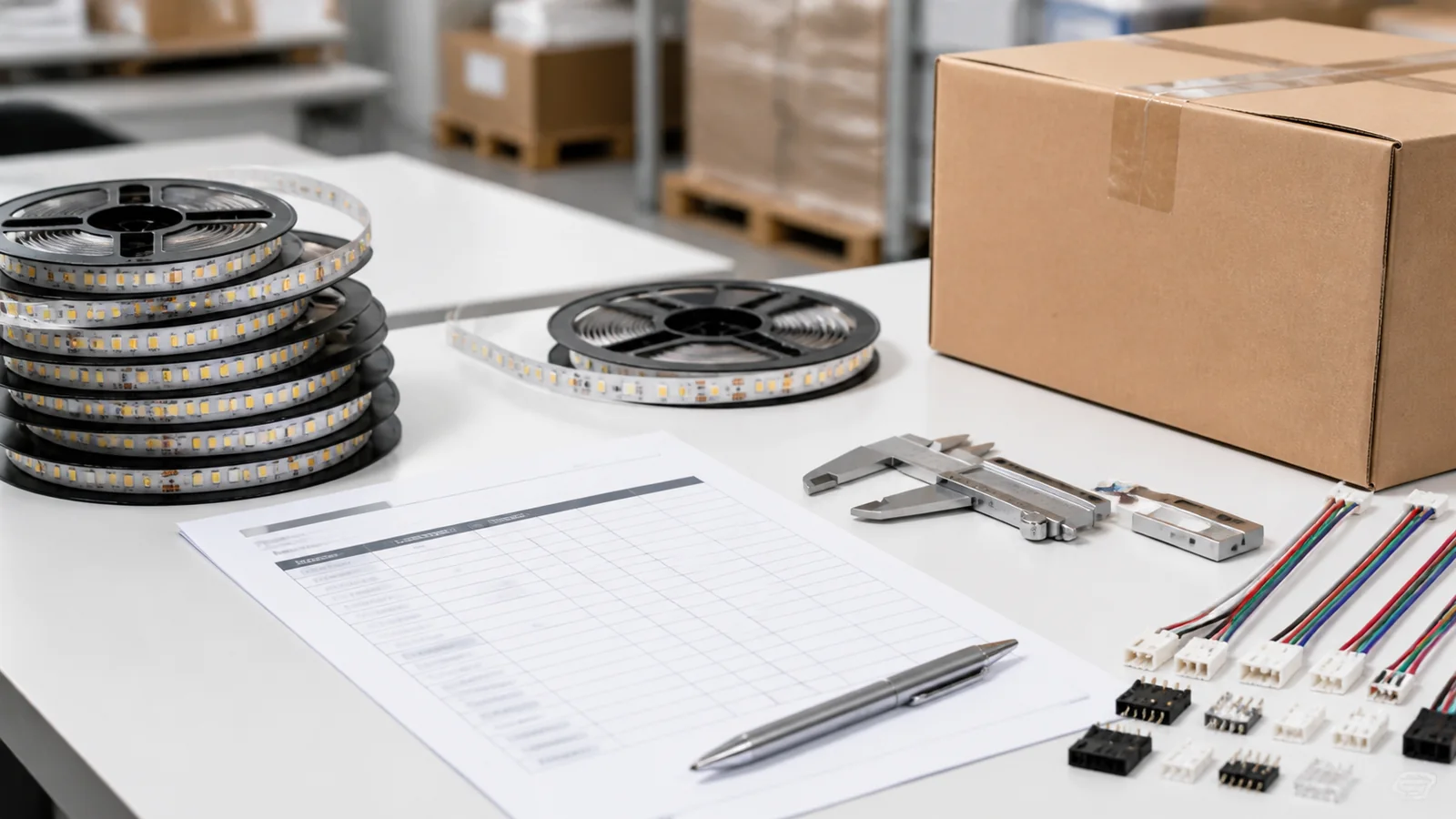
This article is prepared from our current product catalog and B2B specification workflow. Electrical, waterproofing and installation requirements vary by model and market, so confirm the final specification and approved sample before ordering.
Discuss Your Specification