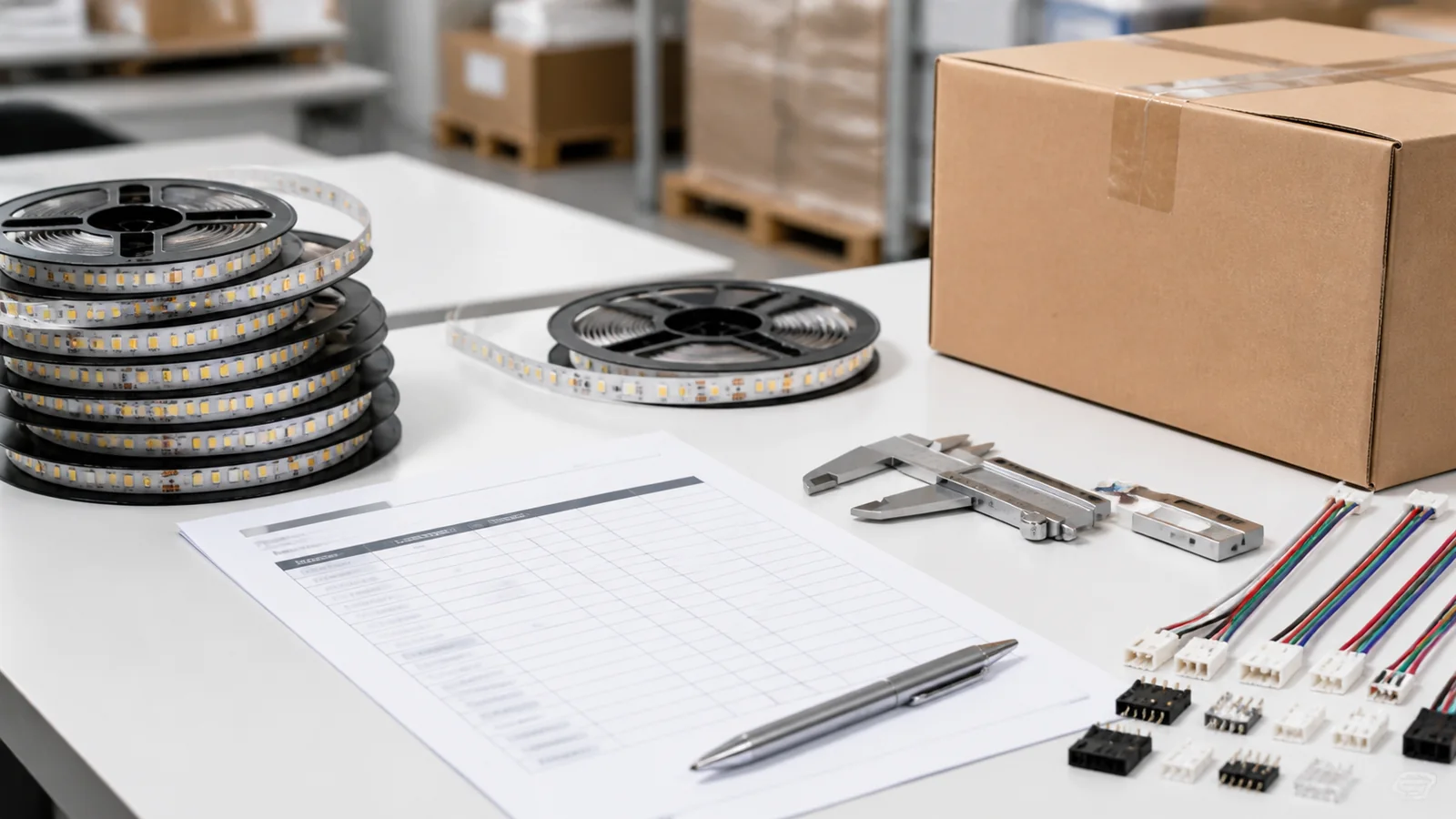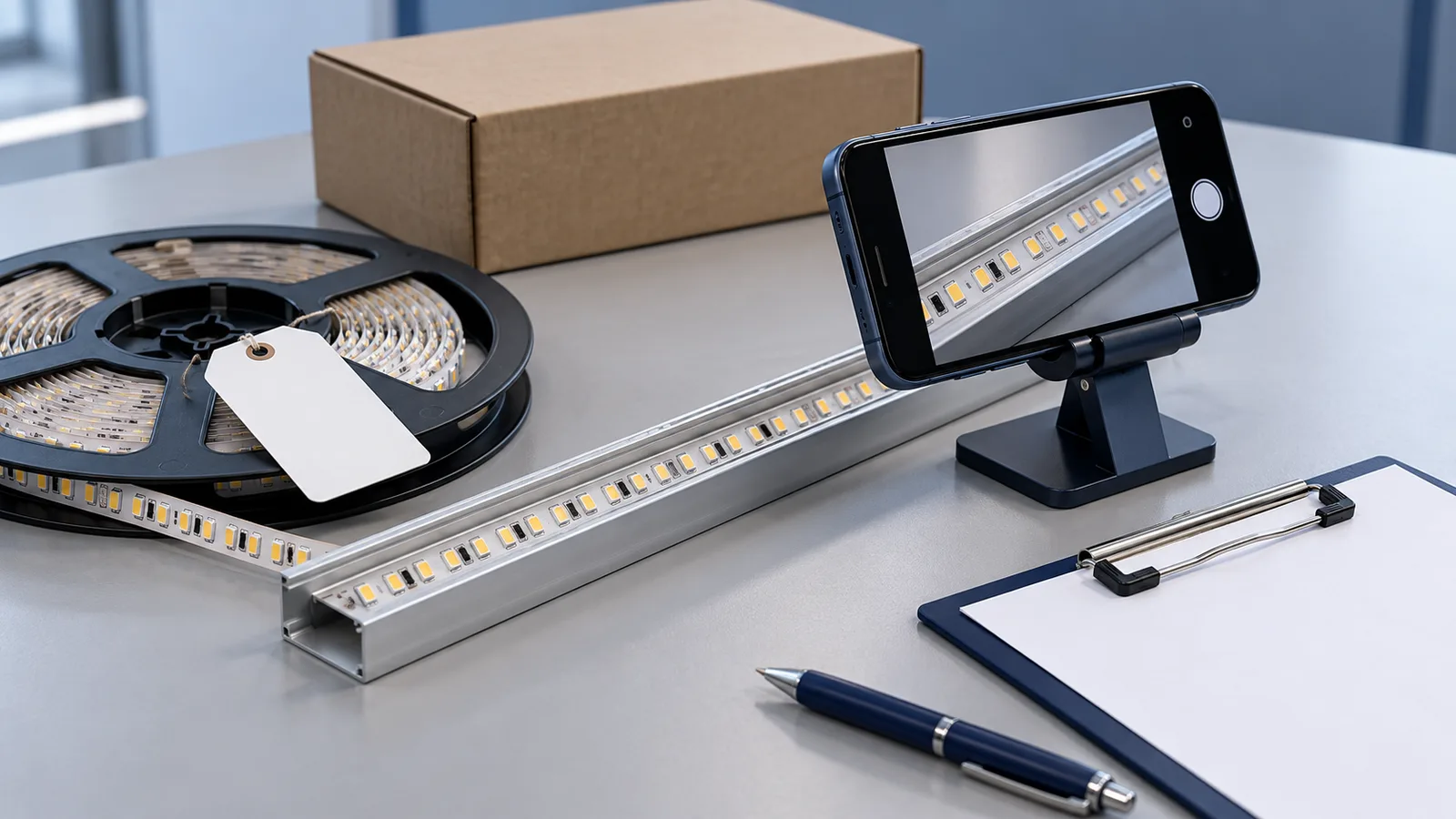
Before requesting an LED strip replacement, preserve the affected material and send a report that identifies the order, exact product, symptom and quantity checked. Include clear photographs and the operating setup. Separate what you observed from what you think caused it. A useful report helps the supplier review the case; it does not establish the cause or guarantee warranty acceptance.
Stop operating equipment that shows burning, smoke, damaged insulation, water-related electrical damage or abnormal overheating. Isolate it safely and use qualified personnel where necessary. Do not reproduce a dangerous fault just to obtain a video.
Keep the strip and its order identity together
Retain the reel or bag label, carton identification and the affected section. Photograph them before dismantling or returning anything. Connect each item to the purchase order and the product variant actually supplied, including voltage and color. A catalog entry offering DC12/24V options does not identify which version arrived.
Mark suspect material in storage and keep it separate from usable stock. Do not discard the original label, remove components or repeatedly cut the strip while investigating. Record any cutting, soldering, resealing or replacement already carried out; those actions can change the evidence.
For a bulk order, list the affected reels or cartons. Keep confirmed affected quantities separate from material checked without that symptom and material not yet checked. For example, if five reels out of twenty examined show a problem, report that observation. Do not describe the entire shipment as defective or estimate a shipment-wide failure rate without an agreed assessment method.
The batch-traceability guide explains which identities should be retained. Missing lot information should be stated plainly; do not assign a batch code from a neighboring carton and assume it is the same.
Describe what the buyer or installer can see
Use a precise symptom, such as “one section is dark after the second connector” or “the light drops out only at the lowest scene.” “Poor quality” does not show whether the problem concerns appearance, control behavior or a damaged connection.
| Evidence | What it should establish |
|---|---|
| Wide installation photograph | Branch layout, mounting and where the symptom occurs |
| Close-up with power isolated | Strip markings, cut points, terminations and visible damage |
| Supply and controller labels | Exact equipment references and ratings |
| Reel, bag and carton photographs | Relationship to the order and shipment |
| Short video, only if safe | Sequence, control setting and time before the symptom appears |
Record when the fault was first observed: on receipt, during sample testing, after cutting or after installation. Give the operating state and whether the symptom is constant or intermittent. Include the elapsed operating time if known, and mark estimates as estimates.
For an appearance complaint, include the approved sample reference and the comparison conditions. Keep exposure and white balance consistent in photographs. A camera record is not a calibrated color or lumen measurement, and a phone can introduce apparent flicker that differs from what people see.
Do not expose customer names, faces, access codes or unrelated paperwork in the pictures. Retain original files privately; send only the material needed for the review.
Report observations before assigning the cause
The symptom can originate in the strip, supply, controller, cable or joint. Consult the safe troubleshooting guide for the relevant sequence. A dark section alone is not proof of a manufacturing defect.
Only perform checks that are safe, within your competence and compatible with the equipment documentation. Isolate power before changing low-voltage connections. Do not open a mains supply or energize a wound reel. Qualified installers should handle live measurements and unfamiliar electrical systems.
If an installer compares a suspect section with a known-good sample, record the exact substituted part and whether the symptom follows the strip or remains with the circuit. Change one item at a time. A comparison requires matching voltage and compatible hardware; an unrelated spare is not automatically a valid reference.
Record any measured values with the test location, operating state, instrument and person performing the check. A disconnected supply reading does not describe voltage at a loaded strip. If no safe measurement was made, say so rather than filling the report with an assumed value.
Send one report with a clear requested next step
Use this record for the initial message:
- Order or invoice reference, delivery date and reporting contact.
- Exact strip model and supplied voltage/CCT/construction, plus reel or carton identities.
- Installed length per branch and the supply/controller references.
- First observation, visible symptom and the conditions that reproduce it safely.
- Confirmed affected quantity, quantity checked and quantity still unchecked.
- Photo/video references, checks already completed and modifications already made.
- Requested next step: review, an agreed comparison, repair guidance or assessment of replacement options.
Keep the requested action separate from the diagnosis. Ask which evidence or sample the supplier needs before shipping material back. Agree return authorization, packing, destination and responsibility for transport; do not assume a refund, replacement or shipping reimbursement has been approved.
Check the terms for the actual order; another catalog model’s warranty may differ. LEDStripStar’s website terms state that warranty coverage and order conditions are confirmed in the applicable written quotation or agreement.
Start the review through the contact page with the order reference and concise symptom. Ask for the appropriate way to share supporting files if the form does not accept them. Keep the suspect material and identification available until the next step is agreed.
Catalog & Sourcing Note
This article is prepared from our current product catalog and B2B specification workflow. Electrical, waterproofing and installation requirements vary by model and market, so confirm the final specification and approved sample before ordering.
Discuss Your Specification