Specify the backing tape as a material in the order
For a wholesale LED strip order, state the tape manufacturer and product grade, width, thickness excluding the liner, intended mounting surface, temperature conditions and sample approval method. Obtain confirmation of the actual material before quotation. “Strong adhesive” or “3M backing” leaves too much undefined for repeat purchasing.
If a particular brand is required, make it an explicit order requirement and confirm its availability. A name printed on the release liner does not establish the tape grade or suitability for the installation. LEDStripStar’s catalog does not establish a standard branded backing for every model.
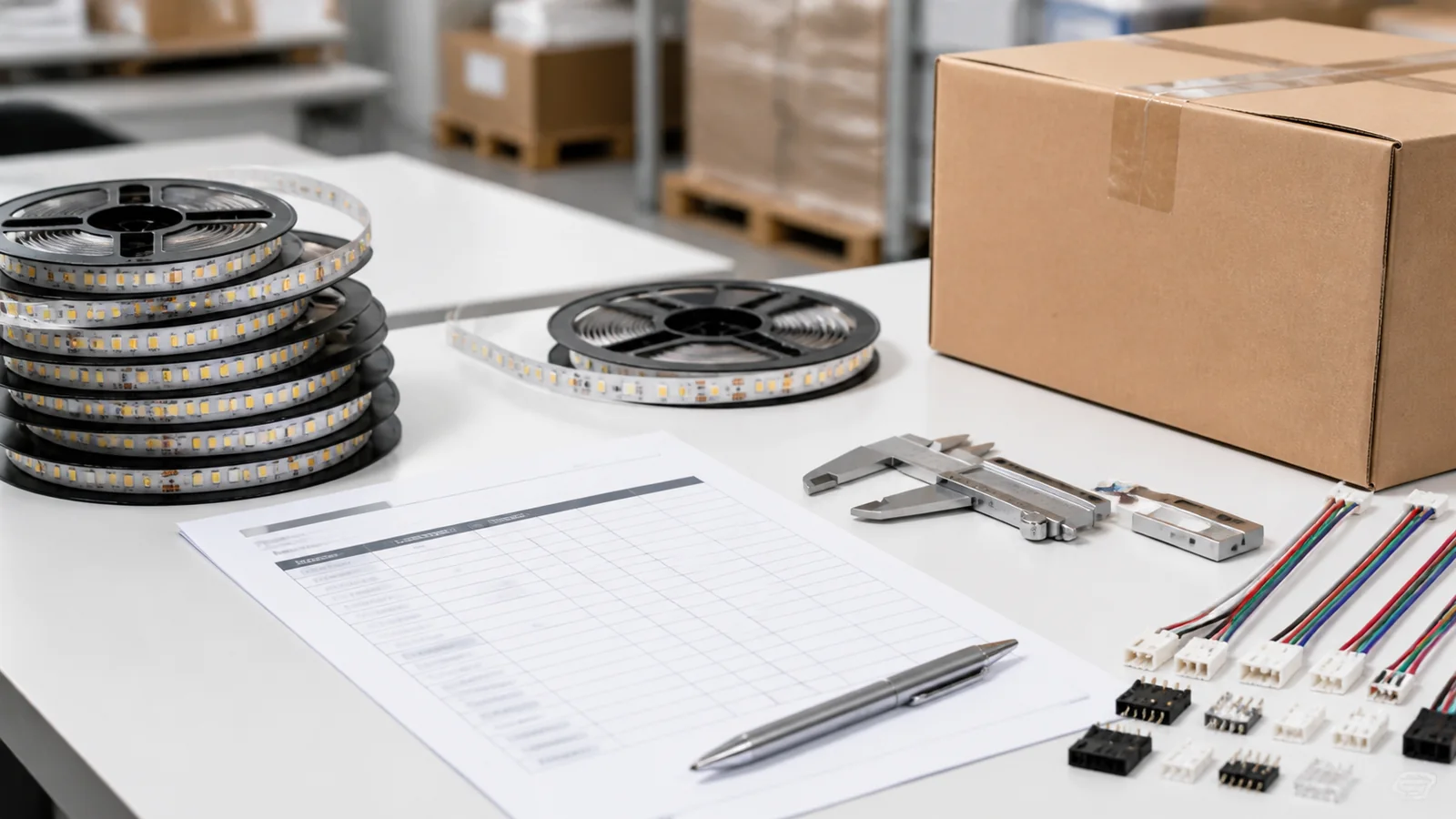
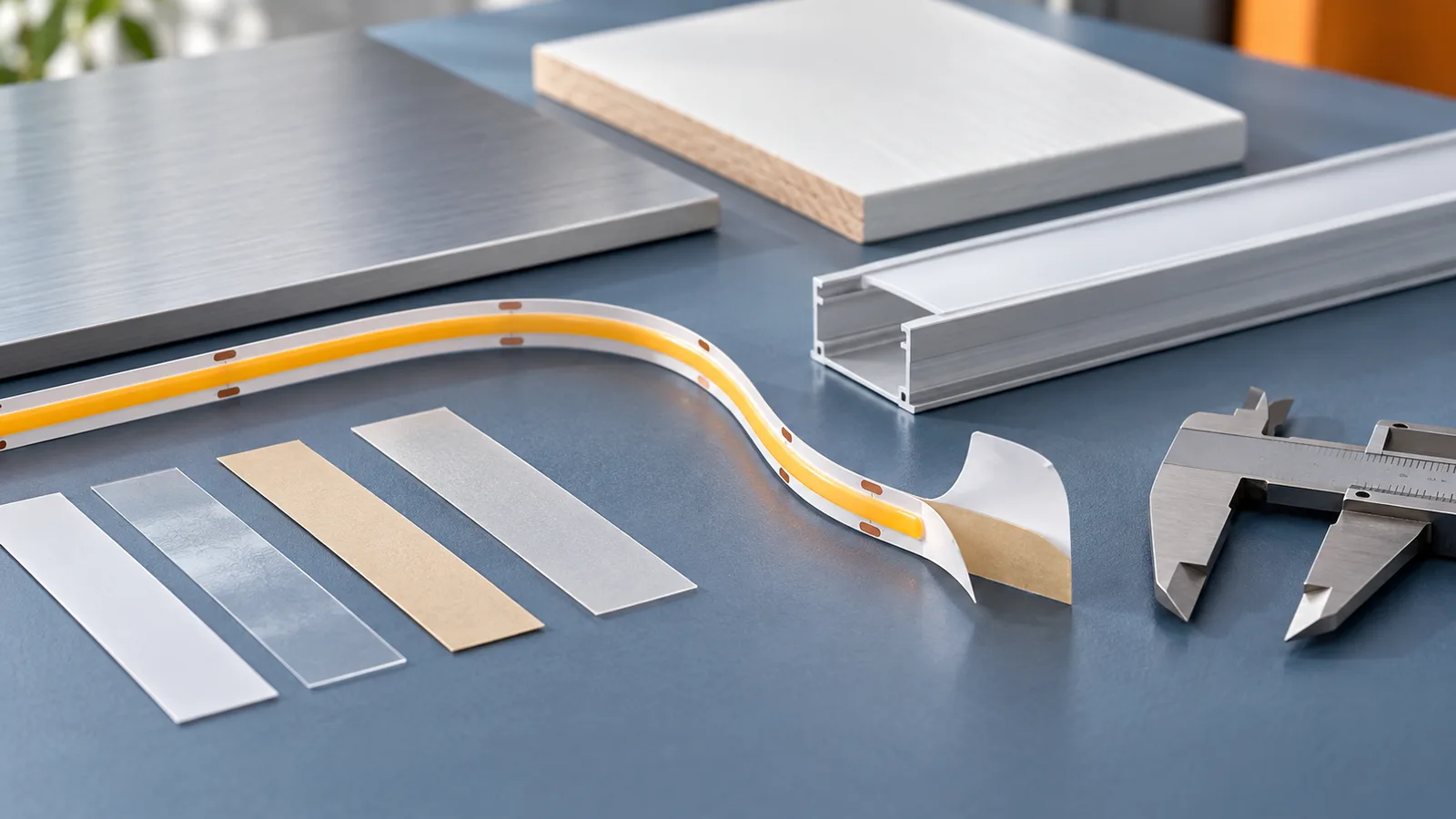
For a strip already lifting from a surface, use the bond-failure troubleshooting guide. The header shows the materials to review in a concept illustration; it does not document supplied tape or a completed test.
Describe both sides of the bond
Record the strip backing and the installed surface as separate materials. Bare PCB, a protective coating and a silicone body do not necessarily accept the same adhesive. Specify the installation surface’s finish too, since “aluminum” or “wood” leaves the coating undefined.
Examples include anodized aluminum, powder-coated channel, painted MDF, sealed plywood, acrylic and bare metal. Include the coating supplier or finish reference when available. Dust, oils, uneven texture and weak surface coatings can change the bond even when the underlying material is the same.
3M’s VHB surface-preparation guidance explains that clean, dry surfaces, contact pressure and bond development matter. It identifies porous substrates and materials with migrating additives as cases needing additional review. These instructions apply to the stated tape family; another backing tape needs its own application guidance.
Send a surface sample or a clear finish specification with the RFQ. If the profile supplier may change the finish, record that change as a reason to repeat the bond check. An approval on bare aluminum does not settle performance on a later powder-coated profile.
Make quotations comparable
| Field | What to put on the purchase specification |
|---|---|
| Material identity | Manufacturer, exact product grade and proposed alternatives |
| Width | Approved tape width for the selected PCB and connection layout |
| Installed thickness | Adhesive and carrier thickness, excluding the removable liner |
| Construction | Transfer adhesive, film carrier, foam or other defined structure |
| Application conditions | Surface preparation, application temperature, pressure and dwell instructions |
| Service conditions | Expected heat, moisture, cleaning exposure and mounting orientation |
| Supply condition | Factory applied or separately supplied, liner and reel arrangement |
| Traceability | Material lot reference, application date and accepted sample reference |
Require the bidder to mark deviations. If the requested grade is unavailable, review an alternative before production. A substitution changes a material in the approved assembly, even if it looks similar on the reel.
Width should allow flat contact without fouling components or connection points. Confirm how the factory handles leads, solder joints and cut ends. A short sample may hide tape gaps that recur along a full production reel.
Ask how the tape is applied to the strip. Wrinkles, overlapping sections, trapped contamination or liner damage can create inconsistent seating. Include those conditions in incoming inspection so purchasing and the installer use the same acceptance criteria.
Include tape in the installed thickness and heat review
The tape changes the assembled strip height. Check the PCB, LEDs or encapsulation, tape and diffuser clearance together. A thicker backing can affect how a connector seats or how the strip lies in a narrow profile.
Compare application-temperature instructions with service-temperature limits. Applying tape to a cold surface and operating it later in a warm channel are separate conditions. Obtain both from the exact tape documentation and use the project conditions to judge suitability.
An adhesive described as thermally conductive needs supporting material data. 3M’s 8926 interface-tape flyer describes a specific thermal interface product for LED applications. It does not make ordinary mounting tape equivalent to that material.
Review the complete heat path from PCB through the backing into the mounting surface. A bond that holds during a brief bench check does not establish temperature suitability for a closed cove. Use the LED strip heat guide when planning the operating check.
Approve tape on the actual profile or surface
Build the sample using the proposed strip backing, tape, surface finish and preparation process. Record the material identities before applying anything. Keep an unused reference sample from the same materials.
An approval sequence can include:
- Inspect the strip backing and substrate for contamination or coating damage.
- Prepare the surface using instructions appropriate to the tape and finish.
- Apply the tape with the stated pressure and allow the specified bond-development time.
- Inspect seating, gaps, wrinkles and edge lifting before energizing the assembly.
- Operate the sample in the intended mounting arrangement and document temperature conditions.
- Check retention and surface condition after the agreed operating or environmental exposure.
Specify duration, sample size, acceptance criteria and removal method before calling this a pass/fail test. A peel or shear value has meaning only with its defined method and conditions. A brief hand pull can identify an obvious problem, but it should not become an invented bond-strength rating.
For overhead or vertical installations, review mechanical support with the project designer. Tape selection does not remove the need to consider clips, channels and the consequence of detachment. The mounting comparison helps decide the arrangement.
For temporary displays, ask whether removability is a requirement. Approval should include the surface after removal as well as whether the strip stays attached during use. A tape that holds firmly can damage a weak paint layer when removed.
Keep the approved material and process identifiable
Tie the accepted sample to the strip order and tape material reference. Request notification before a change in tape grade, width, thickness, strip backing or application process. Repeat the relevant assembly checks when a change affects the bond.
At receipt, inspect reel condition, liner release, tape alignment and material records against the accepted sample. Confirm storage conditions and any stated shelf-life limit with the material supplier. Heat, contamination and crushed reels can affect usability before installation starts.
For a quotation on the 8mm 320LED/m COB model or another strip, send the mounting surface, orientation, tape requirement and sample criteria through the quote form. Standard wholesale MOQ is 500m. Tape availability and the final backing construction must be confirmed for the order.
Catalog & Sourcing Note
This article is prepared from our current product catalog and B2B specification workflow. Electrical, waterproofing and installation requirements vary by model and market, so confirm the final specification and approved sample before ordering.
Discuss Your Specification