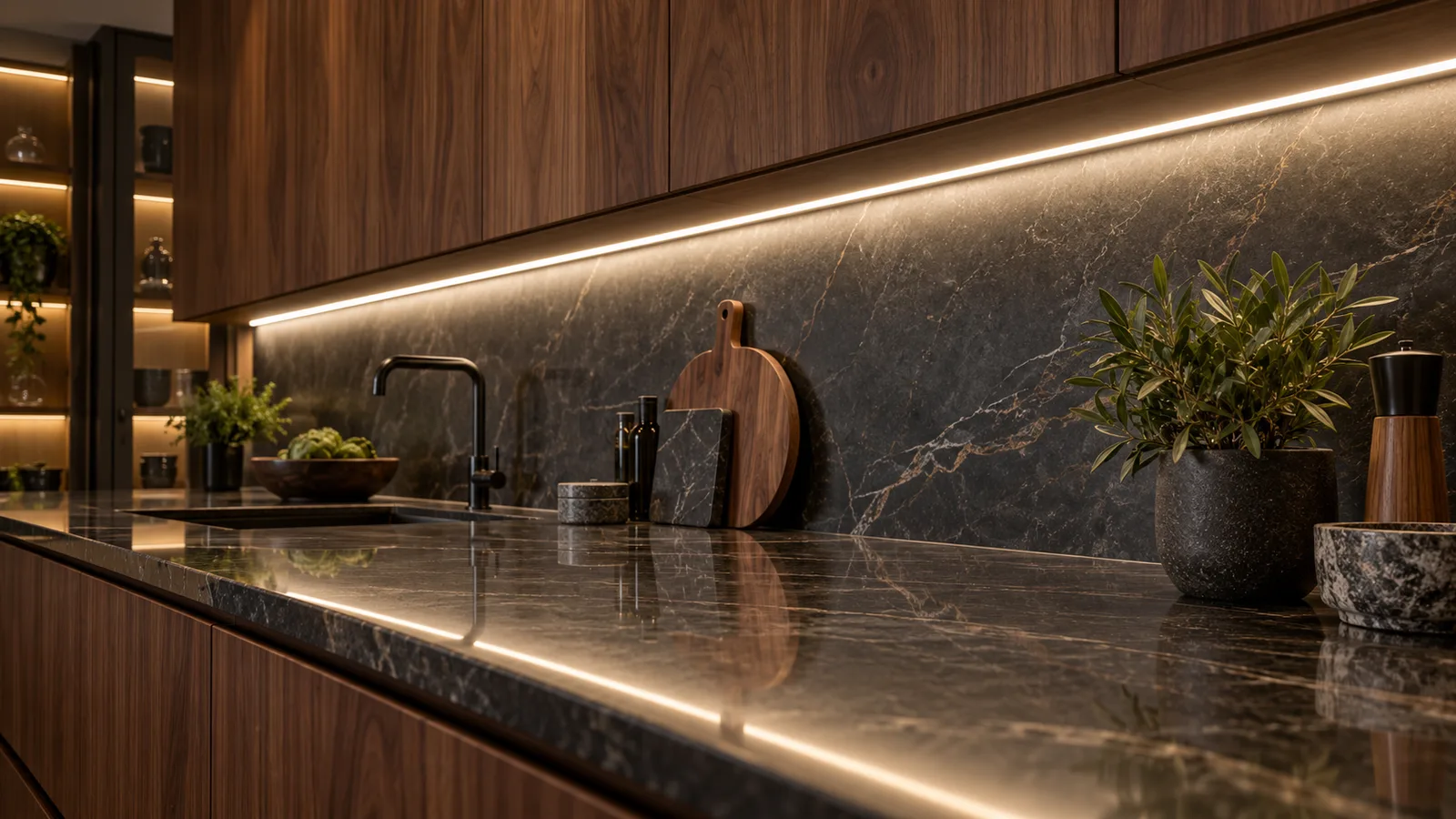
A polished countertop can show an image of the light source mounted above it. A diffuser or COB strip may turn a row of reflected dots into a continuous line, but the line can still be visible. First identify whether the objection is individual points, a bright reflected band or direct glare from the fixture. Then test the profile position and shielding on the actual finish.
When a smooth source still leaves a bright reflection, replacing the strip alone may change little. Approve the cabinet detail with useful worktop lighting on, checking what occupants see from standing and seated positions.
Separate the reflected image from the light on the worktop
Look at the countertop with the cabinet lighting on and other lights held at a consistent setting. Move through the normal working and seating positions. If a sharp row of points or a line changes position as you move, inspect it as a source reflection. A broad area of illuminated stone is a different observation.
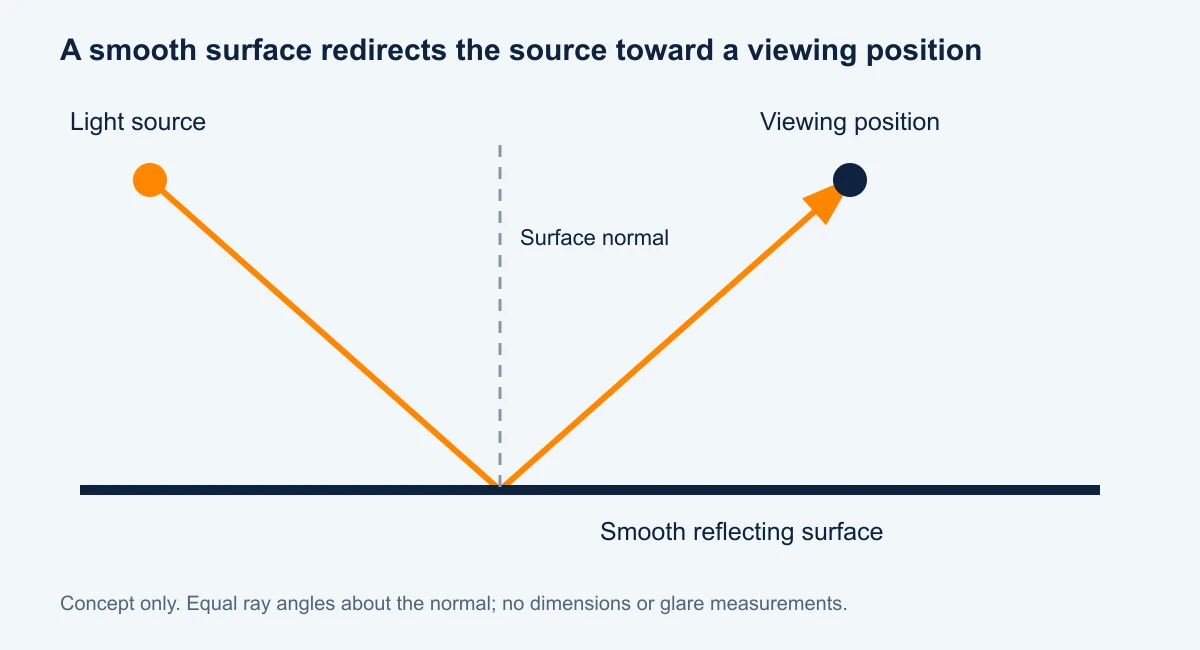
The law of reflection explains why smooth surfaces send a source image toward particular viewing directions. Surface texture can spread the reflected light. A polished stone sample and a matte sample therefore cannot stand in for one another during approval.
Check the fixture directly as well. A strip visible below the cabinet edge may cause direct glare even when its reflection has been improved. Photograph both observations from recorded positions; an automatically exposed phone image cannot establish acceptable brightness by itself.
Try the mounting detail before buying a different source
Make a movable mock-up with the intended profile, diffuser and countertop sample. Disconnect power before moving or changing the assembly. Have the installation team provide a safe temporary mounting and supply arrangement.
Compare a forward position, a deeper setback and an angled profile where the joinery permits them. Keep the light setting and viewing positions consistent. Moving the profile changes where light reaches the worktop and where its reflection is visible; there is no single setback that works for every cabinet depth and seating arrangement.
Kichler’s cabinet-lighting overview distinguishes work-surface lighting from decorative cabinet lighting. Apply that distinction during the mock-up: a less visible source is not an improvement if the preparation area becomes inadequately lit.
Choose the remedy for the observed problem
| Observation | Candidate adjustment | Check before repeating the detail |
|---|---|---|
| Distinct reflected dots | More suitable diffuser depth or a continuous-looking source | Dots disappear at the relevant viewing positions |
| Continuous bright reflection | Profile position, aiming or shielding | Reflection is less distracting and the working area remains lit |
| Source visible below cabinet edge | Recessed mounting or a concealing lip | Lip does not create an unwanted worktop shadow |
| Reflection acceptable only when very dim | Revisit geometry and required task light | Normal working scene is usable, not just the display scene |
| Uneven result between cabinets | Check joints, aiming and finish differences | The full run matches the approved sample |
These are trial options, not guaranteed fixes. An opaque shield can block useful light as well as the unwanted view. A stronger diffuser can change delivered light and appearance, so evaluate it with the selected strip rather than assuming it is optically neutral.
The 5mm CRI90 COB model is a source option for a narrow assembly. Its PCB width does not establish the profile’s external dimensions or eliminate reflections. Use the profile guide to check the complete section, and the diffusion guide when reflected points remain visible.
Record an approved cabinet detail
Retain the countertop finish, cabinet section, profile position, diffuser reference, selected strip variant and working scene. Include seated views where the counter faces a dining area. Check a corner or joint if the repeated installation includes one.
For quotation, send that section and the relevant photographs through the enquiry form. Define what the installation team must reproduce and which viewing positions govern acceptance. If the countertop or cabinet finish changes later, repeat the optical check before releasing the remaining joinery.
Catalog & Sourcing Note
This article is prepared from our current product catalog and B2B specification workflow. Electrical, waterproofing and installation requirements vary by model and market, so confirm the final specification and approved sample before ordering.
Discuss Your Specification